5 Payment Gateways in Malaysia: Fees, Features and What to Check
Compare Fiuu, iPay88, senangPay, CHIP and Stripe in Malaysia. Review published fees, payment methods and what to check before integrating your checkout.

On this page14 sections
Your customer has chosen a product and is ready to pay. This part should feel easy.
They choose online banking, a card or an e-wallet. The payment goes through. Your website records the correct order, and your team knows what to prepare.
That is the job we want a payment gateway to do. When comparing providers, look at the customer's experience, the fees and how your team handles the money afterwards.
Our five-provider shortlist is Fiuu, iPay88, senangPay, CHIP and Stripe, in that order. This is Haptic X's editorial selection, rather than a claim that the first provider is cheapest or best for every business.
Bank, card or e-wallet: what is the difference?
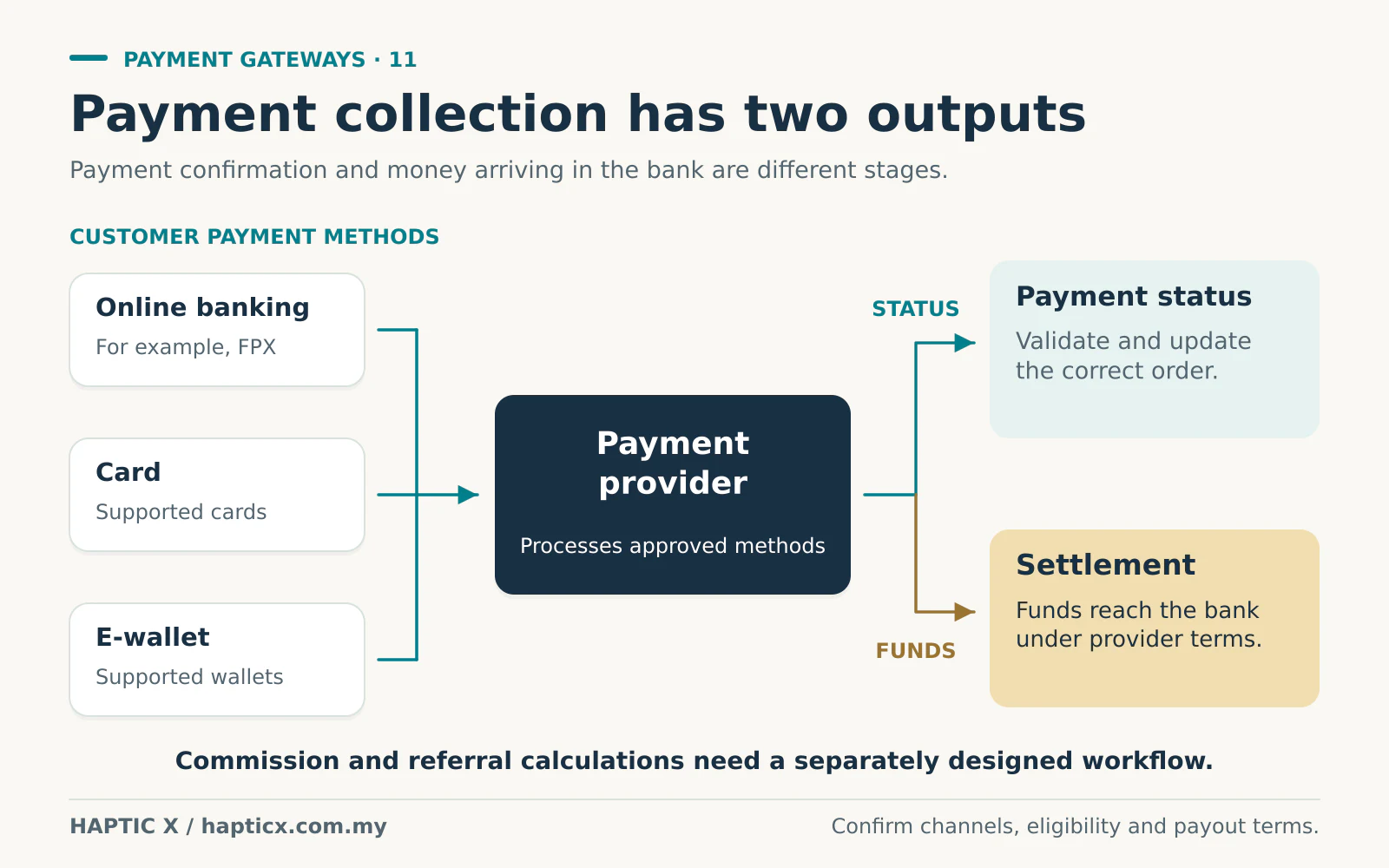
A payment gateway connects the payment process to your website or app. The payment methods are the different ways a customer can pay.
| Method | What the customer does | What it means for your business |
|---|---|---|
| Online banking, such as FPX | Chooses a supported bank and authorises the payment | Check the fee and whether consumer or business payments are supported |
| Credit or debit card | Pays with a supported card | Check local versus foreign-card fees, refunds and disputes |
| E-wallet | Pays through a supported wallet | Confirm the exact wallets included in your approved package |
| DuitNow QR | Scans a supported payment QR | Check how payment is matched to the right online order |
A normal bank transfer can work too. But if customers send screenshots and staff manually check every payment, that becomes more work as orders grow.
The gateway integration should give the website reliable payment information. A screenshot sent over WhatsApp is not the same as a verified order update.
For overseas customers, ask three separate questions: Where was the card issued? What currency will the customer pay? What currency reaches your bank? Those choices can affect the fees.
The fees, in a format you can compare
The public rates below were checked on 1 November 2026. They may change, and the provider's written quotation controls your actual fees. Confirm taxes, minimum charges, approved payment methods and any additional charges before signing up.
| Provider | FPX / online banking | Cards | E-wallet examples |
|---|---|---|---|
| Fiuu | Current merchant quote needed | Current merchant quote needed | Quote by payment channel [1] |
| iPay88 / NTT DATA ADAPTIS | Current merchant quote needed | Current merchant quote needed | Quote by payment channel [2] |
| senangPay | Higher of RM1 or 1.5% | Local: higher of RM0.65 or 2.5%; foreign cards depend on package | Higher of RM0.65 or 1.5% [3] |
| CHIP | B2C RM1; B2B1 RM2 | Local credit 2%; local debit 1%; foreign credit/debit 3% | Listed wallets 1.4%; online DuitNow QR 1% [4] |
| Stripe | 3% + RM1 | Domestic 3% + RM1; add 1% for international cards; add 2% if currency conversion is required | GrabPay 3%; Alipay 2.9% + RM1 [5] |
B2C refers to consumer payments; B2B refers to business payments. These are payment-processing charges to the merchant. Website development and gateway integration are separate costs.
1. Fiuu: compare the channels your customers need
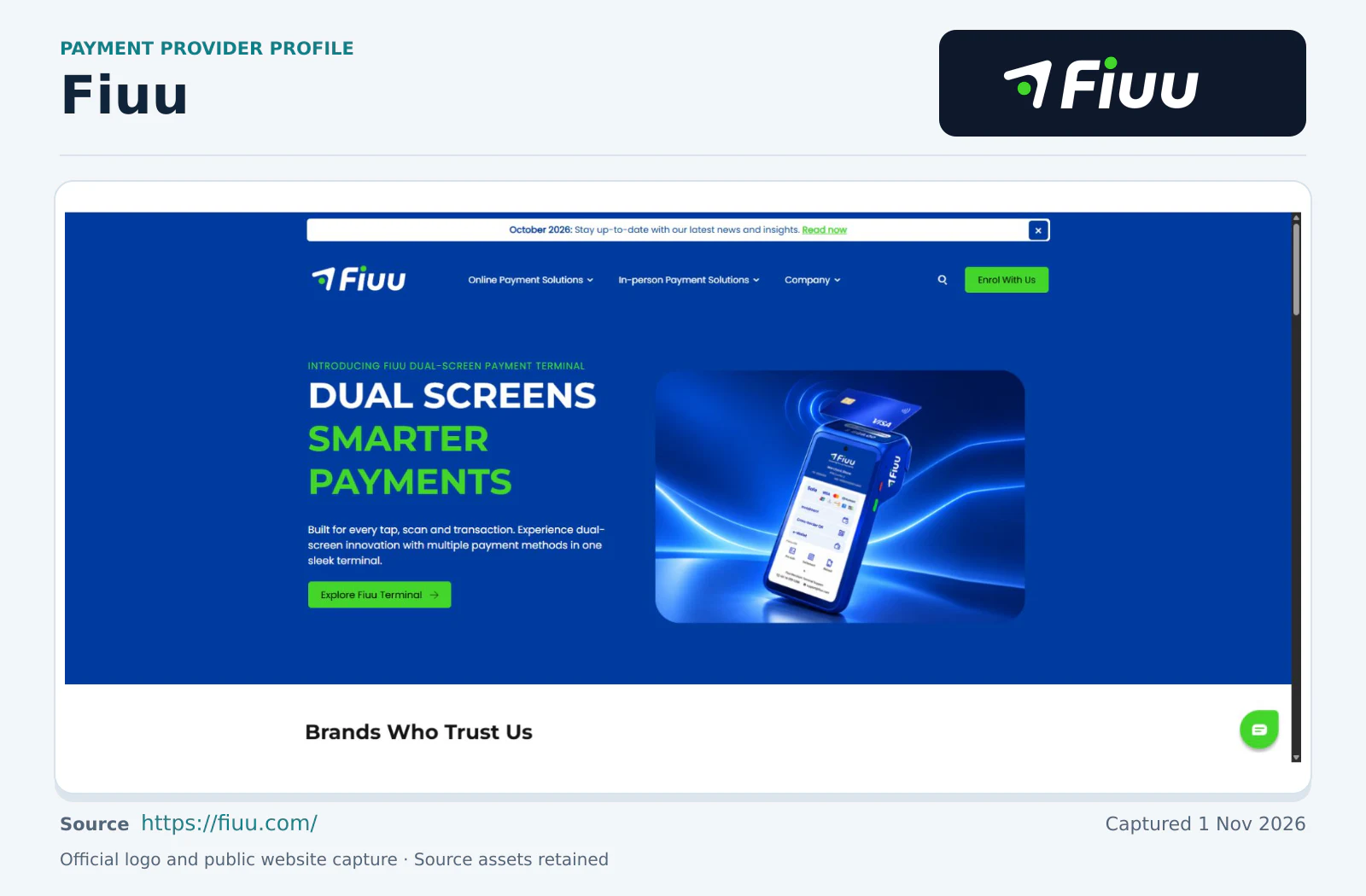
Fiuu offers cards, internet banking, e-wallets, QR and other regional payment channels, with website integration options.[1]
If your customers pay in several different ways, that range is useful to investigate. Start with the channels your customers actually use, then ask what is available for your business.
For its main merchant rates, we need a current written quotation. That quotation should state each transaction fee, setup or annual charges, settlement timing and any minimums. An old promotion or another company's negotiated rate is not a reliable price for your account.
For Shopify, there is another figure to check: Fiuu's FAQ lists an additional 0.25% Shopify processing charge. Include that and any separate Shopify platform fee in your comparison.[1]
2. iPay88: check the current NTT DATA ADAPTIS offering
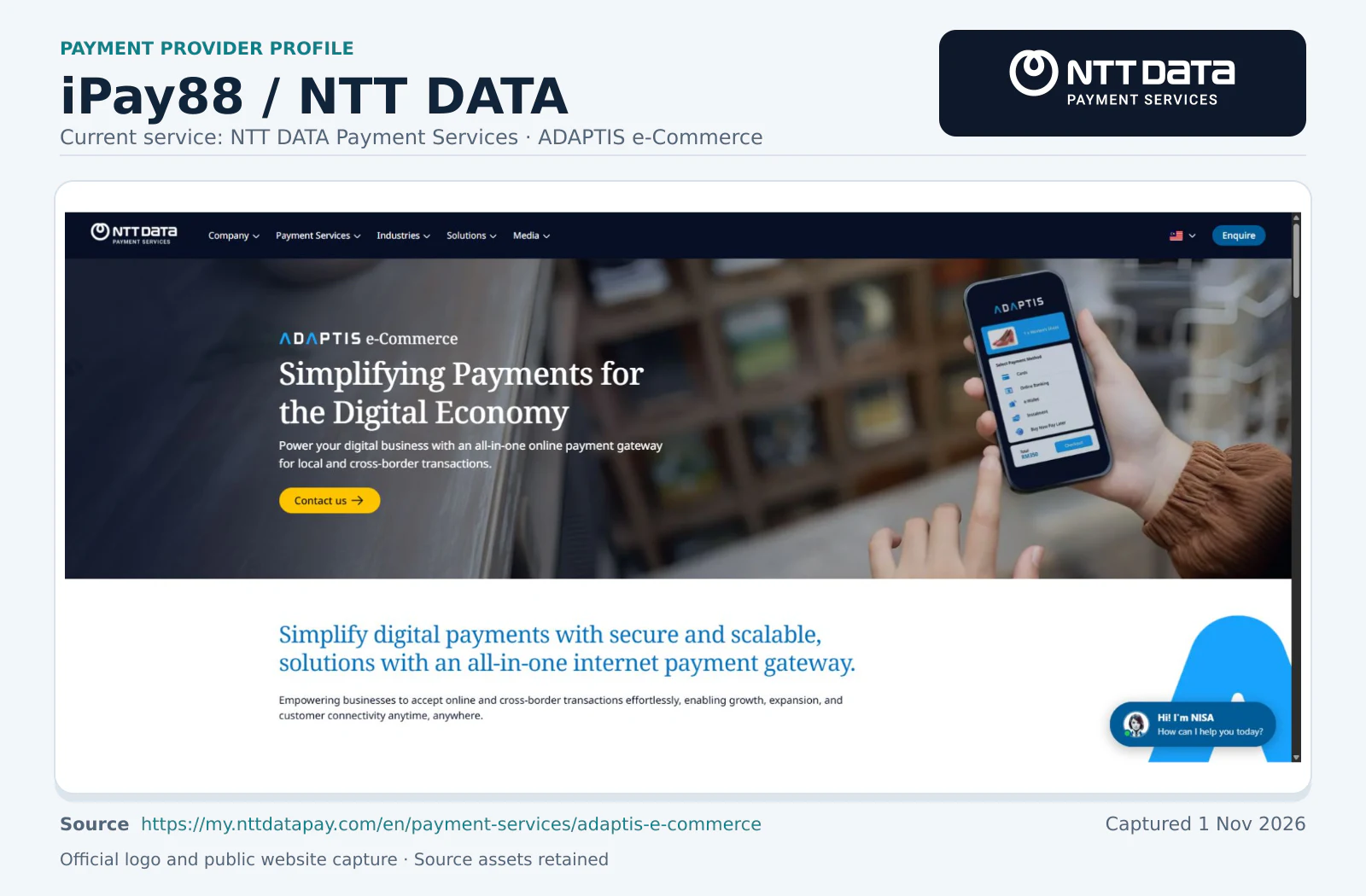
Many Malaysian business owners recognise the iPay88 name. Its official website now leads to NTT DATA Payment Services Malaysia's ADAPTIS e-Commerce page.
That page describes online banking, cards, e-wallets, payment links and recurring-payment options.[2] It is the current service information to review when asking about this provider.
We also need its current written merchant rate card before putting exact fees into your project budget. The public page checked for this guide does not provide a complete numeric rate card.
Tell the provider how you sell, your expected monthly volume and the payment methods you need. Then compare the full proposal with the others.
3. senangPay: check the annual plan and each transaction
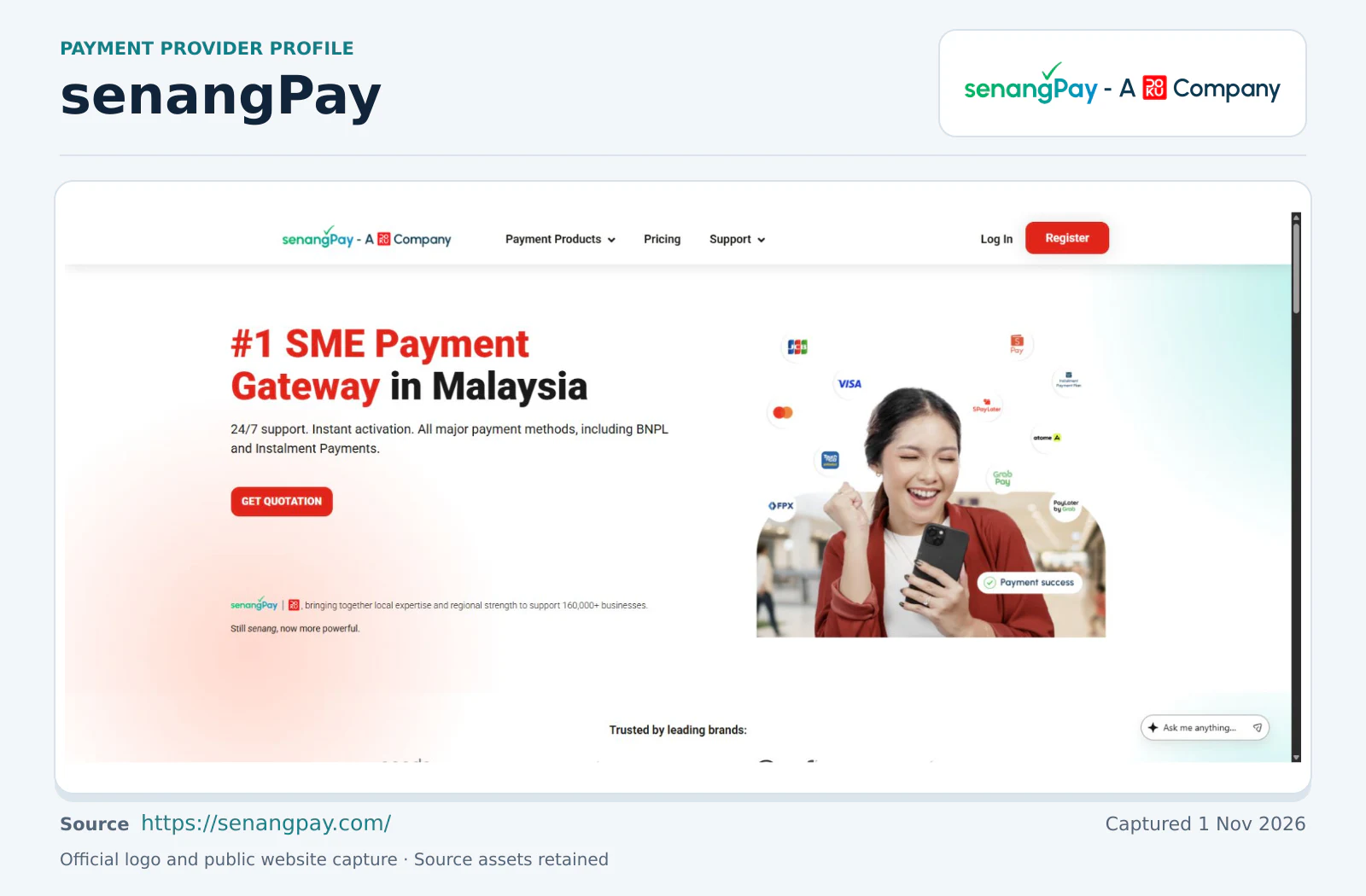
senangPay publishes regular annual prices of RM199 for Starter and RM349 for Advance; Enterprise is quoted separately. The Starter plan describes online banking and e-wallet collection, while Advance offers broader options.[3]
There is also a fee when a customer pays. For example, the published FPX rate is the higher of RM1 or 1.5%.
On a RM100 payment, 1.5% is RM1.50, so the base fee is RM1.50. On a smaller payment where 1.5% is below RM1, the minimum matters.
Choose the plan around the payment methods and integration you need. The pricing page also displays a seasonal Raya offer; the annual figures here use the regular prices, so you do not have to assume an old promotion is still available.
4. CHIP: look at fixed FPX fees versus percentages
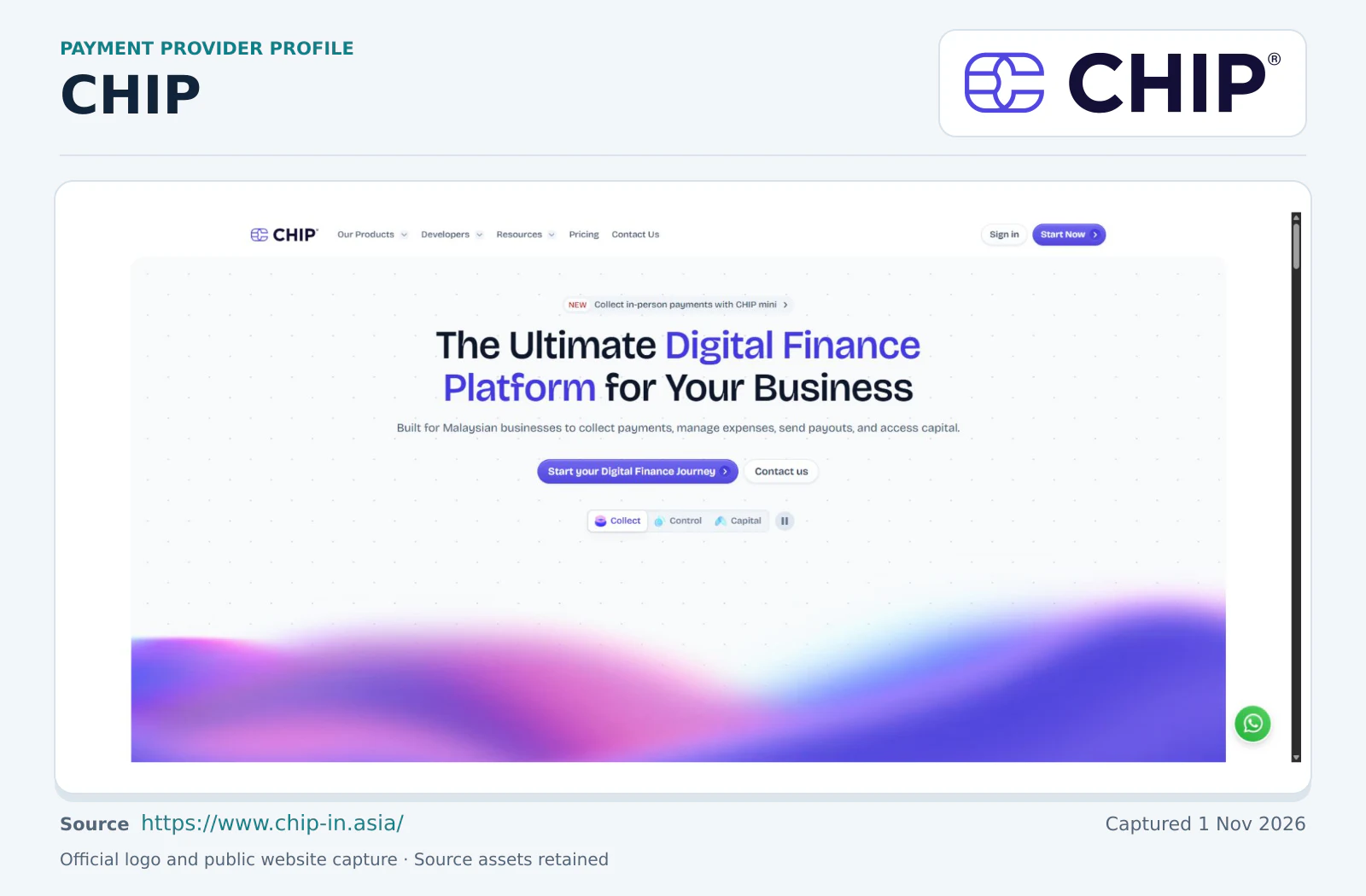
CHIP's published consumer FPX fee is RM1, while its listed business FPX B2B1 fee is RM2. Local credit cards are 2% and local debit cards 1%. Its pricing page advertises no setup or monthly fee.[4]
That makes the payment mix worth looking at. A business receiving many bank payments may get a different result from one receiving mostly credit-card payments.
CHIP also publishes settlement schedules: next-day for FPX and online DuitNow QR, and every two business days for the listed card and e-wallet payments.[4] Confirm how weekends, reviews and other conditions affect your account.
The useful question is how the fees and payout timing fit your orders and cash flow.
5. Stripe: include foreign cards and conversion in the calculation
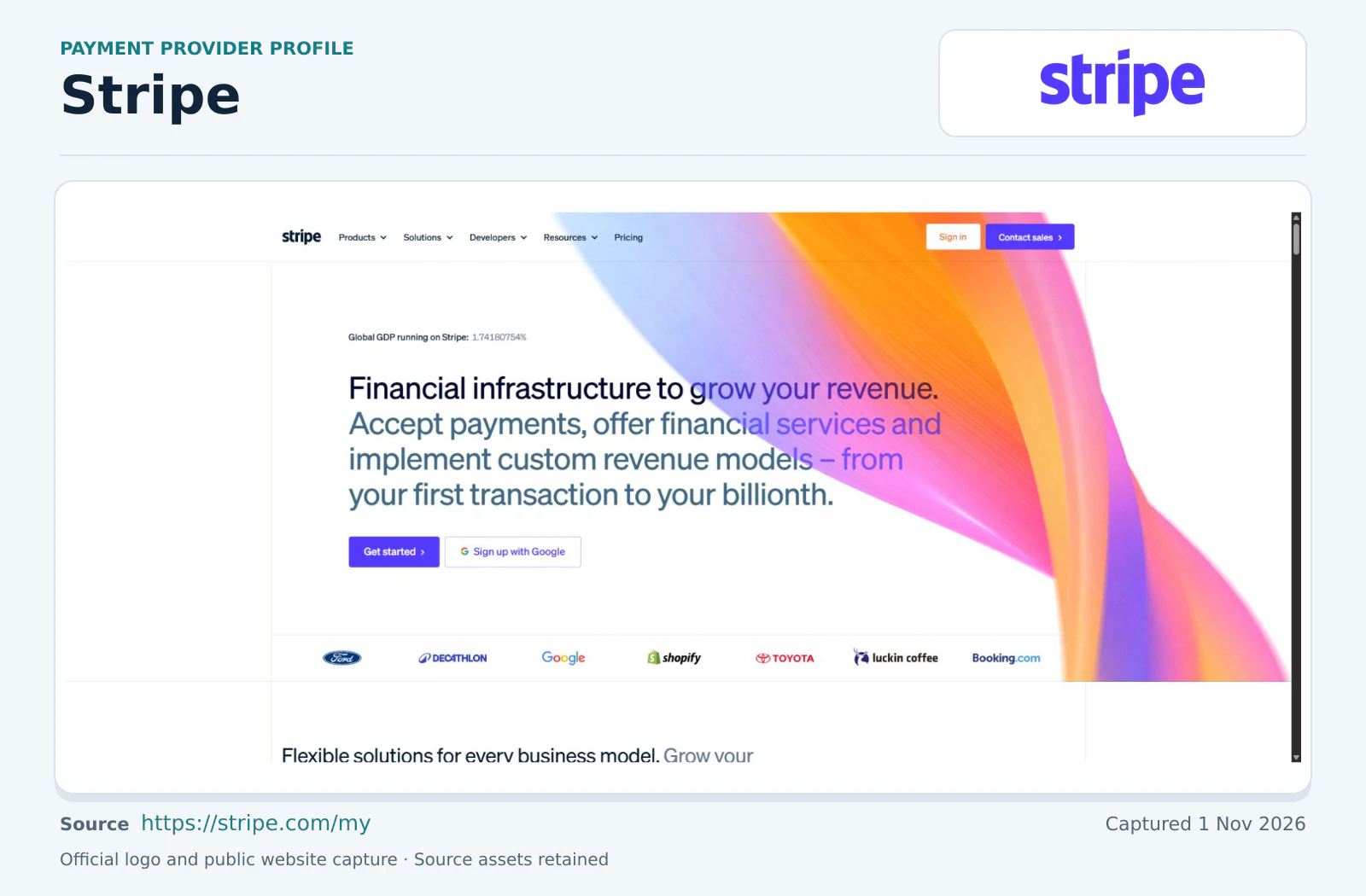
Stripe's Malaysian standard rate for domestic cards and FPX is 3% + RM1, with no setup or monthly fee on standard pricing.[5] A RM100 domestic card payment therefore has a RM4 base fee.
International cards add 1%. Currency conversion, when required, adds another 2%.[5] Compare the transactions your customers will actually make.
Ask your developer which payment tools fit your website and which optional charges apply. Also account for refunds: Stripe does not return original processing or currency-conversion fees on refunded standard-price transactions.[5]
What happens on a RM100 order?
Here are a few simple calculations from the rates above. They exclude taxes, annual plans, refunds, disputes, conversion and extra platform charges.
| Example payment | Calculation | Base fee |
|---|---|---|
| senangPay FPX | Higher of RM1 or 1.5% of RM100 | RM1.50 |
| senangPay local card | Higher of RM0.65 or 2.5% of RM100 | RM2.50 |
| CHIP consumer FPX | Fixed fee | RM1.00 |
| CHIP local credit card | 2% of RM100 | RM2.00 |
| Stripe domestic card or FPX | 3% of RM100 + RM1 | RM4.00 |
The calculations use sources [3]–[5]. A real comparison should use your average order value and the ways your customers pay.
Do not stop at one percentage. A provider also needs to support your platform, your business model and the help your team needs when something goes wrong.
Payment successful does not mean money already in your bank
There are a few different stages.
Payment confirmation tells you the customer has paid successfully through the provider.
Settlement is when the provider sends the money to your business bank account. That follows the provider's schedule and conditions.
A refund returns an agreed payment to the customer. A chargeback is a card-payment dispute handled through the payment process. Fees and handling requirements can differ, so ask about both before signing.
Your Finance team should know how to match an order, its payment, any refund and the amount eventually received. Otherwise, the checkout may work well while the month-end accounts remain difficult.
What about MLM, membership and referral commissions?
This needs a separate conversation.
Suppose a customer pays RM200. Your business gives an agent 10% and a manager another agreed commission. Later, the customer cancels part of the order.
The gateway collects the payment. Your business system must decide who earns what, when the reward becomes payable and how a cancellation changes it. Adding a payment plugin does not build that commission system.
Membership levels, referral rules, approvals, commission reports and payouts need their own design. Collecting money for other sellers may also require particular provider products and approval.
Explain the actual model before development. Do not assume every gateway accepts MLM. Stripe lists multi-level marketing services offering commission or recruitment-based sales as prohibited businesses.[6] Other providers need to assess the real model. A normal referral discount should not simply be treated as the same thing as every MLM arrangement.
Ask the developer to test more than a successful payment
What if the customer pays at the bank, then closes the browser before returning to your website?
What if confirmation arrives late? What if the provider sends the same confirmation twice?
The website should handle those situations properly. It should use verified payment information from the provider, instead of marking an order paid merely because someone opened a thank-you page.[7]
Test successful, failed and cancelled payments, refunds and duplicate notifications. Make sure staff can find the transaction when a customer asks for help.
This is another place where you get what you pay for. A cheap integration that constantly needs manual checking can cost more staff time than expected. The valuable work is making the full payment process reliable.
Start with how your customers buy
Tell Haptic X where your customers are, what an average order is worth and which payment methods you want to offer. We can help plan your e-commerce checkout or custom payment workflow, with the provider's requirements checked before the build.
Sources
Public pages reviewed 1 November 2026. Confirm current written rates before applying; provider terms may change.
[1] Fiuu, FAQs and integration guidance: https://fiuu.com/faq
[2] NTT DATA Payment Services Malaysia, ADAPTIS e-Commerce (destination of ipay88.com): https://my.nttdatapay.com/en/payment-services/adaptis-e-commerce
[3] senangPay, Pricing: https://senangpay.com/pricing/
[4] CHIP, Pricing: https://www.chip-in.asia/pricing
[5] Stripe Malaysia, Pricing: https://stripe.com/en-my/pricing
[6] Stripe, Prohibited and Restricted Businesses: https://stripe.com/legal/restricted-businesses
[7] Stripe, Fulfil orders and payment confirmation: https://docs.stripe.com/checkout/fulfillment
Frequently asked questions
01Which payment gateway is cheapest in Malaysia?
It depends on order values, payment methods, annual fees and other charges. Compare a normal month of your transactions, and get written rates where the public information is incomplete.
02Does a successful payment mean the money is already in my bank?
No. Confirmation and settlement are different stages. Ask for the payout schedule and any minimum, review or reserve conditions.
03Is a foreign card the same as receiving foreign currency?
No. The card's issuing country, the customer's payment currency and your settlement currency are separate details. Ask how each affects your charges.
04Can we use more than one gateway?
Potentially, if the platform and merchant arrangements support it. Each additional gateway adds integration and accounting work, so choose it for a clear business reason.
05Can Haptic X confirm my final rate or guarantee approval?
The provider decides the merchant rate and approval. We can help define your website's needs and integrate the approved payment flow.